What you can build with Chalkroom.
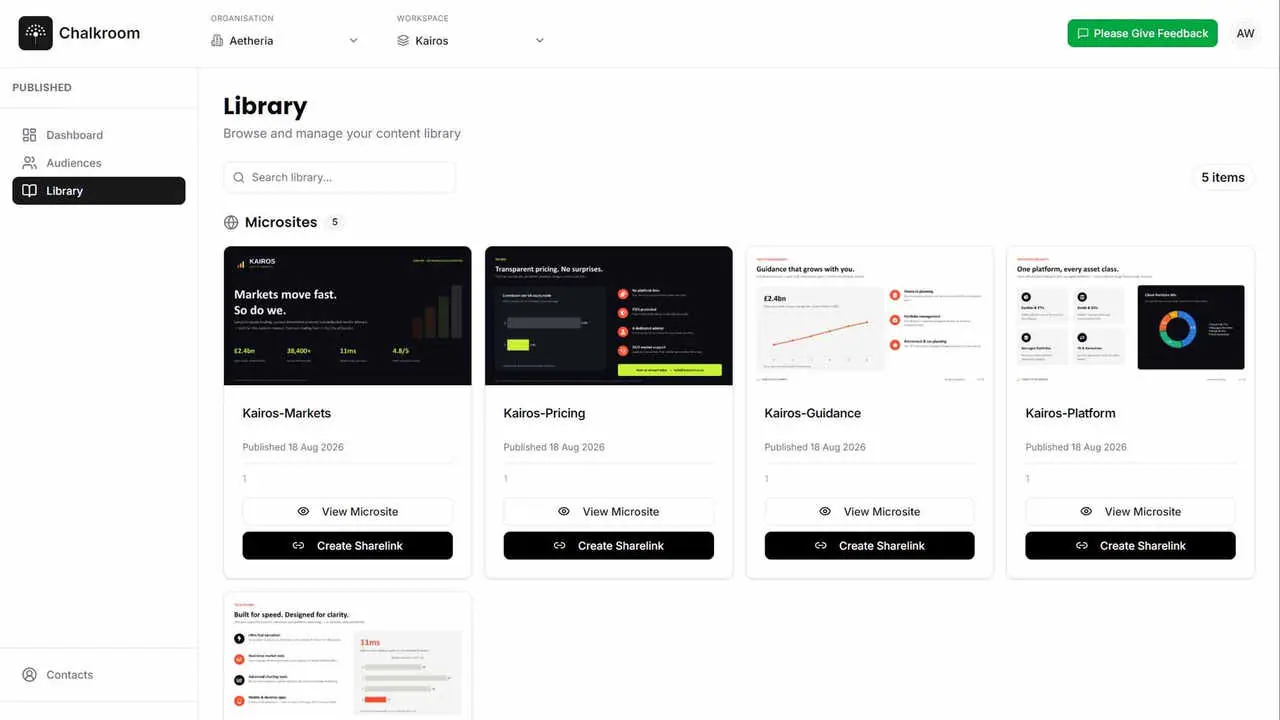
Sales Content Library
A governed, structured library organised by product, use case and buying stage — accessible to every rep at the point of need, always the current approved version.
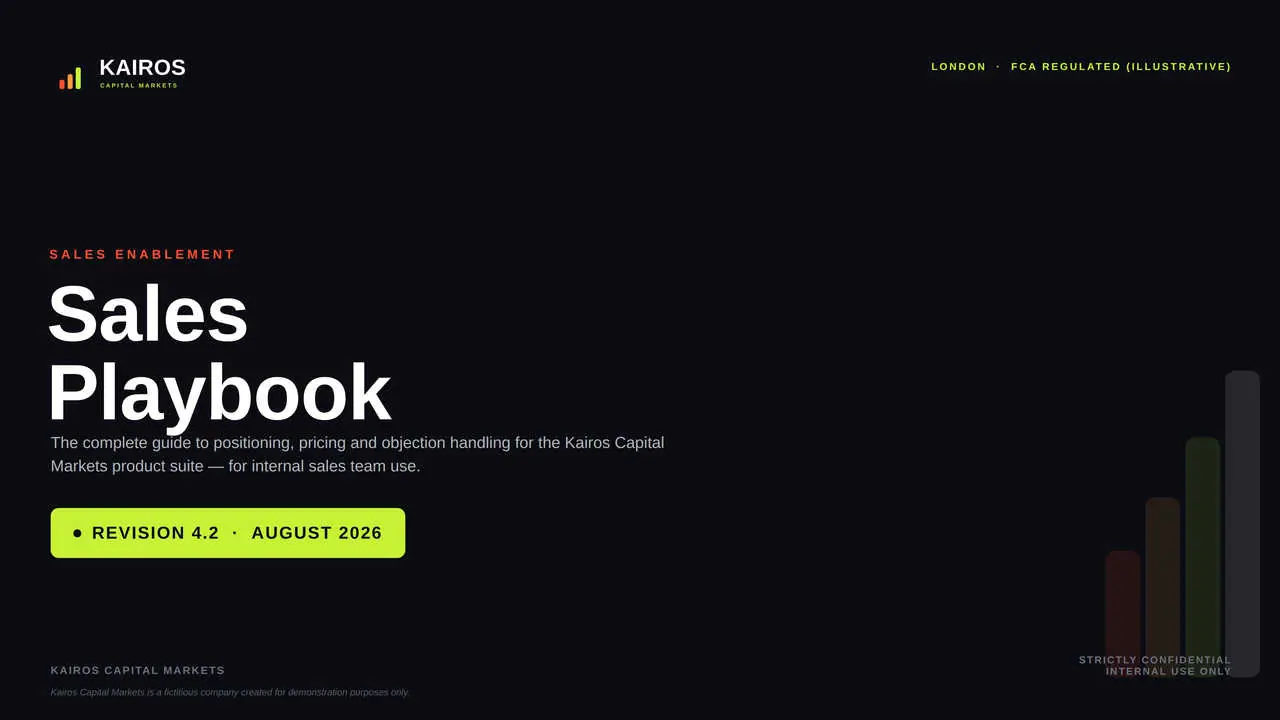
Sales Playbooks
Live-updating playbooks that reps access as interactive links, not PDF downloads. Updated once, current everywhere — with engagement data showing which sections they actually read.
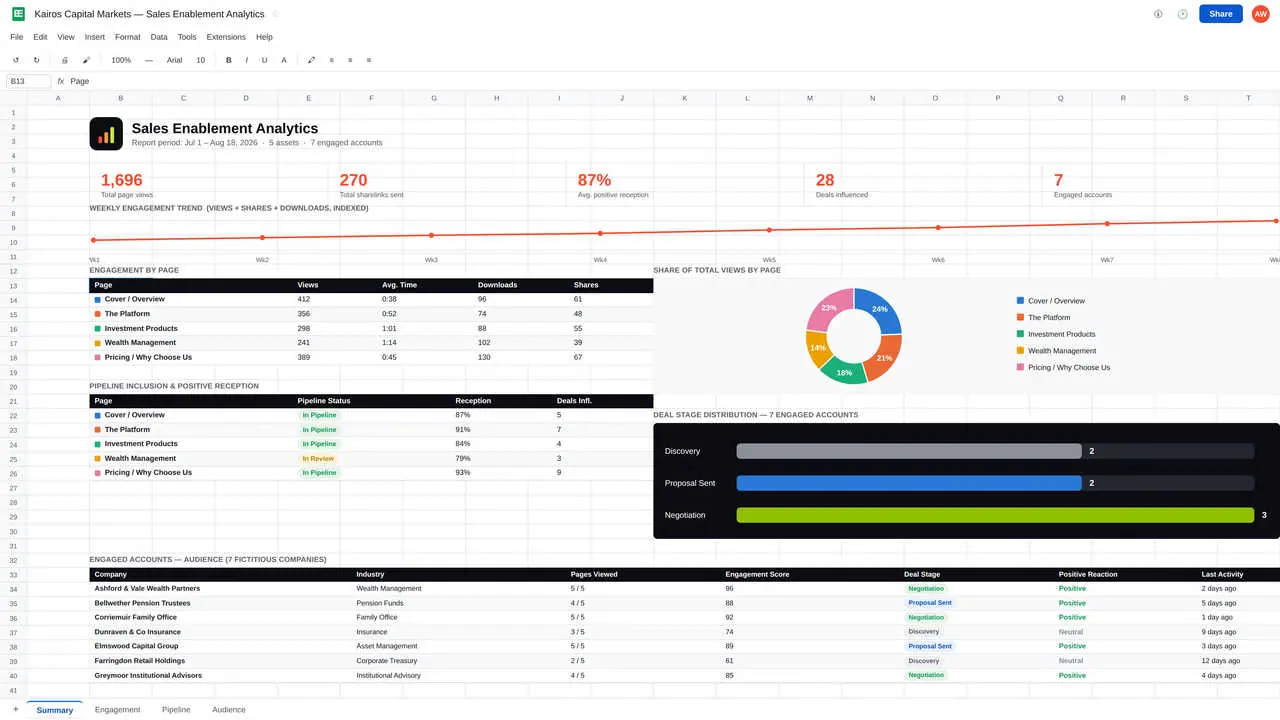
Enablement Analytics
Content adoption reporting that goes beyond downloads: which pieces appear in pipeline, which are shared with prospects, and which generate engagement in deals.
We understand your world.
No visibility into whether reps are actually using the content the enablement team produces
Sales playbooks that get downloaded once and never updated again in rep hands
Content created by enablement buried in a shared drive no rep opens regularly
No way to update a piece of content and know every rep now has the current version
Adoption analytics that show file downloads but not actual engagement in deals
Reps defaulting to creating their own materials because the governed library is hard to access
Built for your workflow.
Content adoption tracking
See which content pieces reps are sharing, how often, and how prospects are engaging with them — not just file download counts.
Governance without friction
Reps access and share content directly from the governed library — no downloading, no saving local copies, no version drift across the team.
Live content updates
Update a playbook or piece of collateral once. Every rep who has ever shared it now shares the current version — without any action on their part.
Enablement analytics
Which content appears most in won deals? Which playbook sections do reps engage with? Which materials are never used? Real answers, not activity metrics.
Structured content library
Organised by product, stage, persona or use case — so reps find what they need at the point of need without emailing the enablement team.
Rep readiness signals
Engagement data shows which reps are actively using governed content and which are reverting to ad-hoc materials — before it shows up in their numbers.
Common questions.
Most enablement teams measure content production — pieces created, training sessions run, playbook launches. Very few measure adoption: whether reps are actually using the content in deals, and whether it's working. Chalkroom adds three adoption metrics:
- Share frequency — how often each content piece is being sent by reps to prospects
- Prospect engagement — how prospects interact with content when shared — open rate, section engagement, forwarding
- Deal correlation — which content pieces appear most often in opportunities that advance and close
These three metrics together answer the question most enablement analytics can't: is our content actually making a difference in deals, or is it sitting unused in the library?
A sales enablement content library should be organised around how reps sell, not around how marketing creates. Reps look for content by situation — not by content type or creation date. An effective library covers:
- By stage — content mapped to each stage of the sales process, from prospecting through to close
- By persona — materials tailored to specific buyer roles (CFO, IT lead, procurement) where those distinctions matter
- By use case — content addressing specific problems or scenarios, not just general capability overviews
- By objection — approved responses to the most common resistance points, ready to share at the moment they arise
A library reps can't navigate in thirty seconds will be ignored. Organisation is as important as content quality.
SharePoint is a document repository — it stores and organises files. Chalkroom is a distribution and analytics platform — it governs how content reaches prospects and measures what happens when it does. Three practical differences:
- Distribution model — SharePoint: reps download files and send as attachments. Chalkroom: reps share links that always point to the current version.
- Analytics — SharePoint: file download counts. Chalkroom: prospect engagement data at the section level, correlated to deal outcomes.
- Content currency — SharePoint: reps may share downloaded versions that are weeks out of date. Chalkroom: every link reflects the current approved version, automatically.
SharePoint and Chalkroom are not direct alternatives — many teams use both. SharePoint for internal document storage; Chalkroom for external content distribution and measurement.
A sales playbook is the operational guide that gives reps the framework to run consistent, high-quality sales conversations. An effective sales playbook covers six areas:
- Ideal customer profile — who the best customers are, why they buy, and how to identify them quickly
- Discovery framework — the questions to ask, the problems to uncover, and the signals that indicate a qualified opportunity
- Product positioning — how to articulate value clearly for each buyer persona and use case
- Objection handling — structured, approved responses to the most common resistance points
- Content map — which assets to share at each stage, with each persona, in each situation
- Sales process — the stage definitions, exit criteria and next-step actions from first contact to close
The best playbooks are living documents — updated when positioning changes, when new objections emerge, and when new evidence of what works in deals becomes available. A static PDF playbook is out of date the moment it's published.