What you can build with Chalkroom.
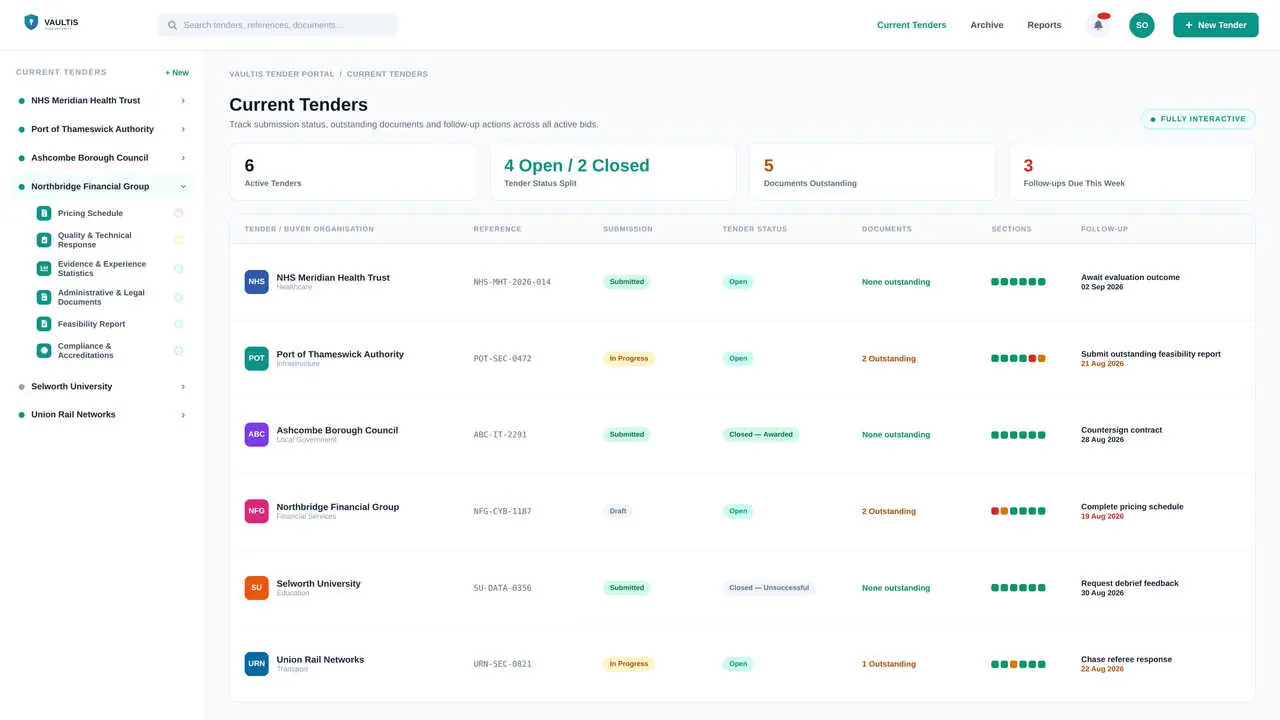
Interactive Tender Submissions
Structured, navigable bids that present methodology, credentials and pricing in a format that stands out — with per-section engagement tracking showing what the panel focused on.
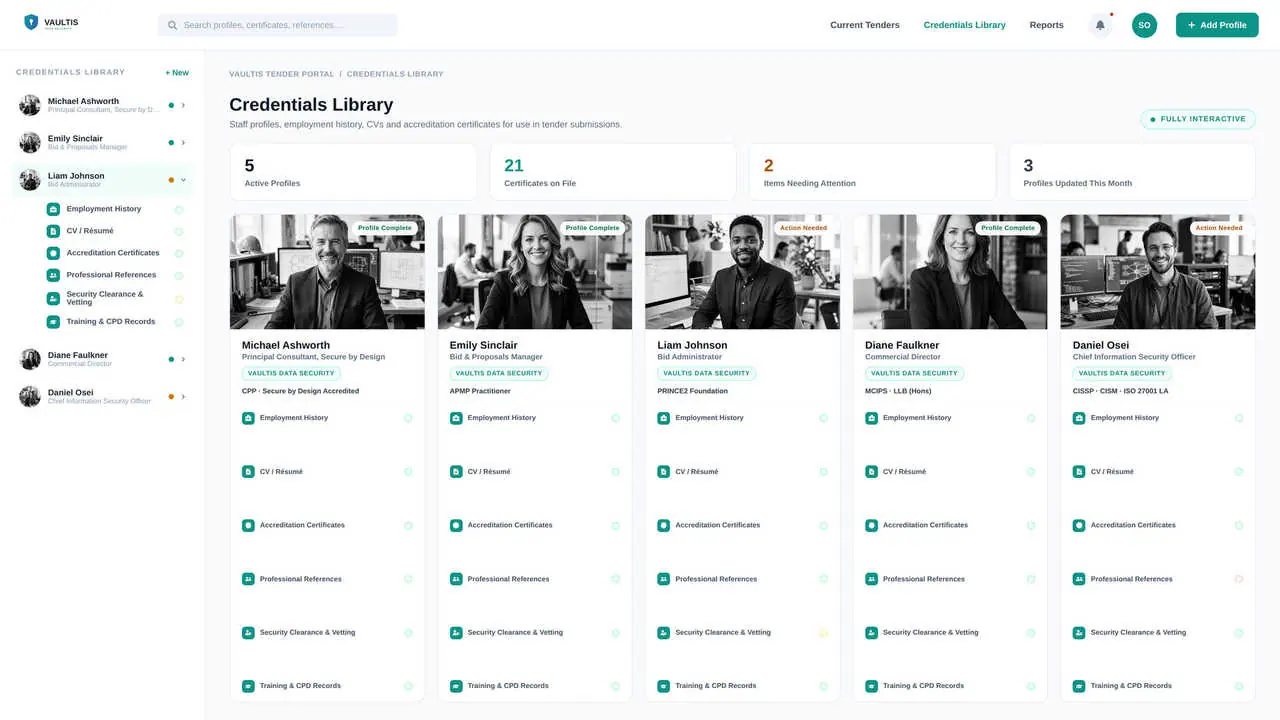
Credentials Library
One governed library of project case studies, team profiles, photography and accreditation certificates — consistent across every bid the team submits simultaneously.
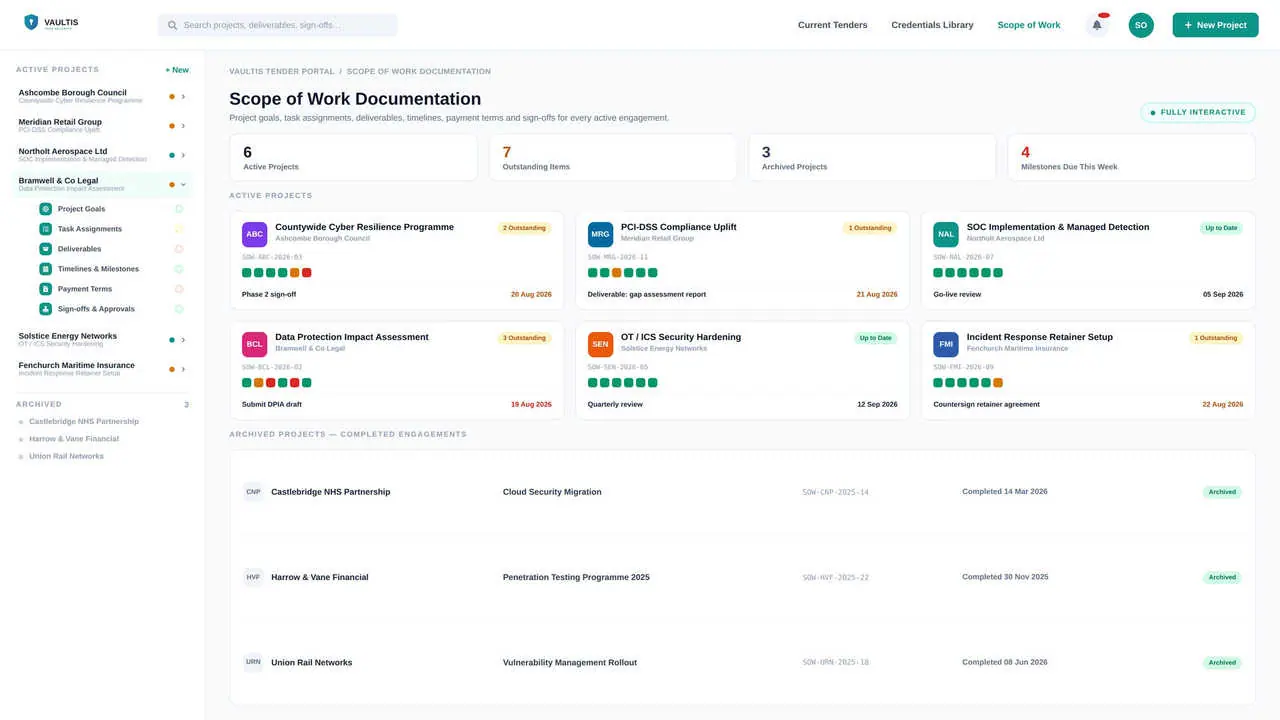
Scope of Work with Approval
Post-award SOW documents with digital acceptance built in — one link, one signed version, one baseline for any future variation conversation.
We understand your world.
No signal on whether the evaluation panel actually reviewed your submission
Assembling each tender from scratch because credentials are scattered across drives and inboxes
Different team members using different versions of practice credentials in simultaneous submissions
Pre-qualification questionnaires rebuilt for every tender rather than governed from a central library
Submission PDFs that compress imagery and present the same flat format as every other bidder
No feedback loop after unsuccessful bids — no engagement data to inform the next submission
Built for your workflow.
Submission engagement tracking
Know when the evaluation panel opens your tender and which sections they spent time on after the submission deadline.
Governed credentials library
Case studies, project photography, team CVs and accreditation certificates in one governed library — consistent across every simultaneous submission the team produces.
Interactive tender submissions
Navigable proposals that structure methodology, credentials and pricing clearly — not a flat PDF scroll that buries key differentiators.
SOW with approval capture
Scope of work documents with digital sign-off for the post-award stage — one link, one baseline, one undisputable record of what was agreed.
Bid analytics
Aggregate engagement data across submitted tenders — which sections generate most evaluator interest, which credentials are resonating.
Version control and audit trail
A complete record of every bid submitted, what version went out and when — ready for debriefs, framework renewals and resubmissions.
Common questions.
A bid team's credentials library is the foundation of every submission — the quality of the library determines how quickly and consistently bids can be assembled. It should contain six asset types:
- Project case studies — specific, relevant project examples with outcomes, kept current and retired when no longer representative
- Team CVs — up-to-date profiles for every team member who appears in submissions, in a consistent format
- Photography and imagery — high-quality project photography and team images at full resolution, not compressed web versions
- Accreditation certificates — current copies of all relevant accreditations with expiry dates tracked
- Methodology statements — approved descriptions of how the firm approaches different types of work, reusable across bids
- Financial and legal documentation — standard documents required in most PQQs and framework agreements
A well-maintained credentials library reduces bid assembly time significantly. Chalkroom's governed library ensures every bid draws from the same current, approved source — regardless of how many simultaneous submissions the team is managing.
Traditional PDF or portal submissions give bid teams no engagement data after the submission deadline. Chalkroom interactive submissions change this — because the submission is shared as a live link, engagement data is available:
- Open notification — know when the evaluation panel first accesses the submission
- Section engagement — see which parts of the bid (methodology, credentials, pricing) they spent most time on
- Return visits — know if evaluators return to specific sections during the evaluation period
This data informs debrief conversations and future submission strategy — understanding what evaluators actually read is more valuable than a numerical score with no context.
Version control failures in bid teams typically follow the same pattern: multiple team members working simultaneously, each saving local copies, and the submission going out with an inconsistent mix of content versions. Three practices prevent this:
- Governed credentials library — all reusable content is stored centrally and accessed via links, not downloaded and saved locally
- Single master document — the bid is assembled in one controlled location, with access managed by the bid coordinator
- Version history — every change to the submission is tracked, with the ability to see who changed what and when
Chalkroom's live-link model is the key control: because team members share links to the credentials library rather than downloading files, there is no local copy problem.
A strong tender proposal covers five areas that evaluation panels consistently score against:
- Understanding of the brief — evidence that the firm has genuinely engaged with the client's specific requirements, not submitted a generic response
- Methodology — how the firm will approach the work, including key risk factors and how they will be managed
- Relevant credentials — specific project experience that demonstrates capability for this scope, not an exhaustive portfolio
- Team — the specific people who will deliver the work, with relevant background and availability confirmed
- Pricing schedule — transparent, structured and easy to evaluate against competing submissions
Chalkroom tender submissions present all five in a navigable interactive format — with per-section engagement tracking showing which parts of the bid the evaluation panel spent most time on.