Proposal software and portfolio presentations for architects and designers.
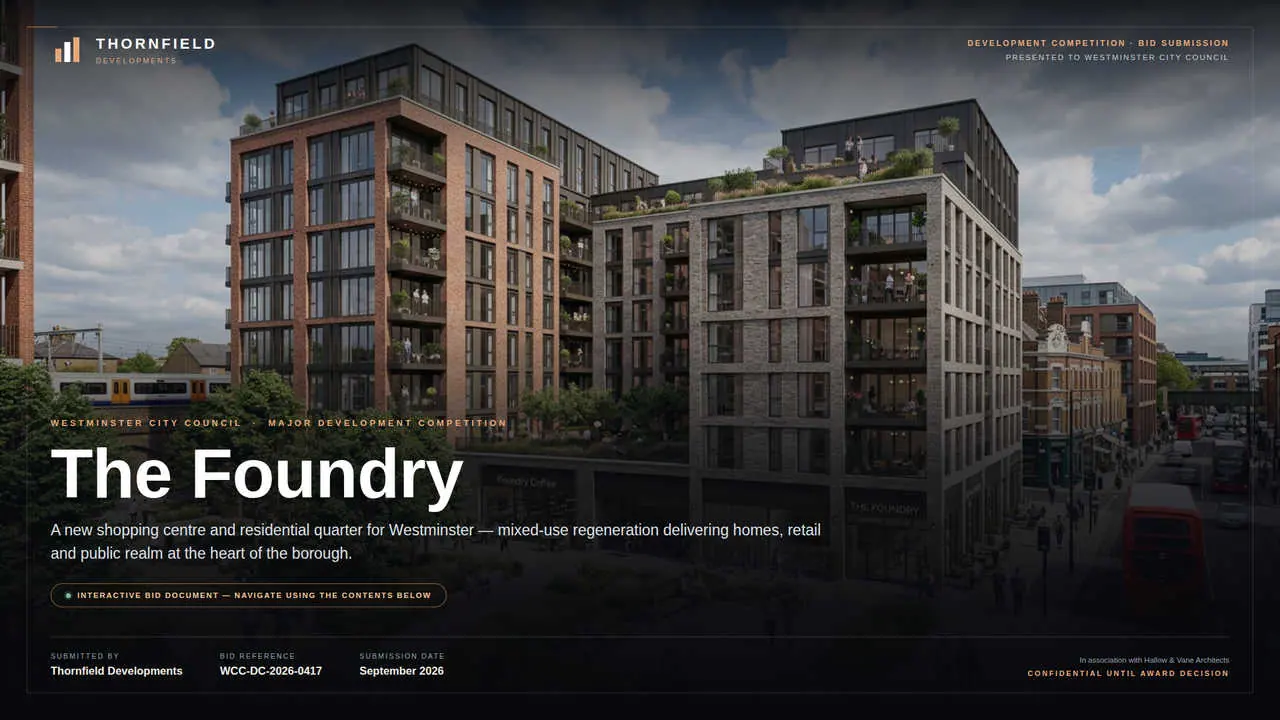
Competition Bids
Submit as an interactive link rather than a PDF bundle — embedded CGIs at full resolution, per-section engagement data, and the ability to add a clarification without resending everything.
What you can build with Chalkroom.
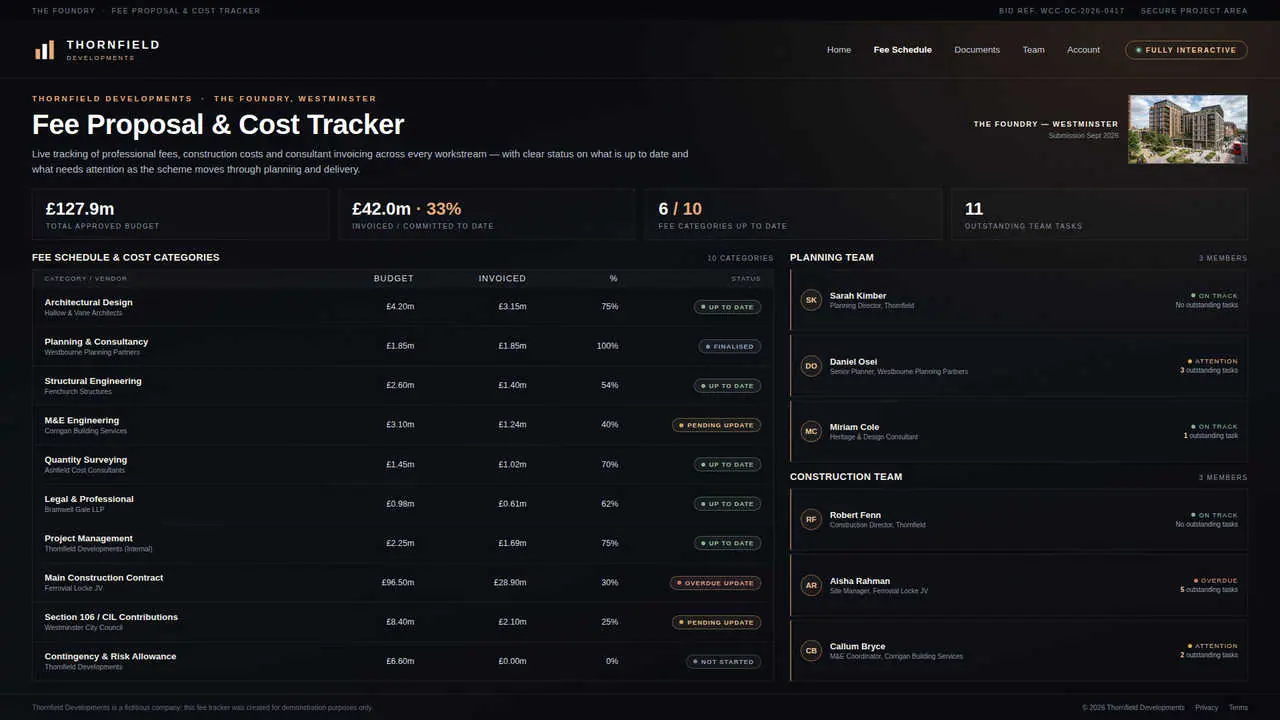
Fee Proposals
Trackable proposals with fee schedule, team credentials and approval capture in one link — so you know when the client has reviewed it and can follow up from an informed position.
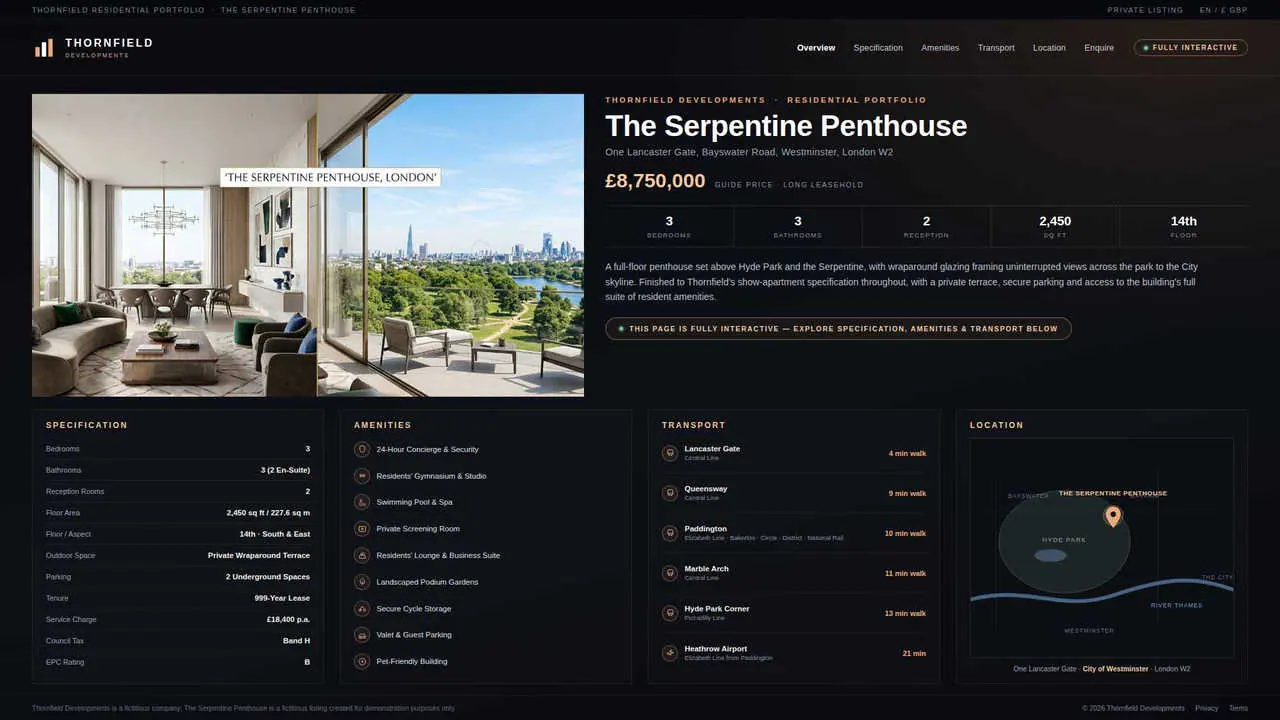
Practice Portfolio
A curated, navigable showcase of your best work — presented as a live interactive portfolio rather than a downloaded PDF that dates the moment it's saved.
We understand your world.
CGIs and 3D renders compressed into flat PDF attachments that lose the quality that justifies the production cost
No visibility into whether the selection panel actually reviewed your competition submission
Credentials decks that look identical to every other practice submitting the same shortlist
Fee proposals chased over email with no record of when or whether they were accepted
Different partners sending different versions of practice credentials from different saves
Competition bids taking weeks to compile from scattered assets across the practice
Built for your workflow.
Submission engagement tracking
Know when the selection panel opens your submission and which sections they spend time on.
Interactive competition bids
Embed CGIs, section models and 3D assets at full resolution in a navigable submission — not compressed into a PDF that loses quality at every save.
Fee proposals with approval
Structured fee proposals with digital acceptance built in. One link, one clear record of what was proposed, reviewed and accepted.
Governed credentials library
One approved library of project photography, case studies and team profiles — consistent across every partner and associate who sends proposals.
Practice portfolio
A curated, live-updating portfolio — updated once in the library, reflected immediately in every link you've ever shared with a prospective client.
Portfolio analytics
See which projects in your portfolio generate most interest — and use that insight to curate the next pitch more effectively.
Common questions.
Selection panels reviewing multiple similar submissions respond to three distinguishing factors:
- Visual quality at full resolution — CGIs and visualisations that demonstrate the level of design thinking, not compressed images that suggest the opposite
- Clear narrative structure — a submission that guides the panel through a logical design story, not a folder of assets they have to interpret themselves
- Specific response to the brief — showing genuine understanding of the client's project and context, not a repurposed past submission
Chalkroom competition submissions present all three in a navigable interactive format — with per-section engagement data so you know which parts of the submission the panel spent most time on after the fact.
An effective architecture fee proposal covers five elements that clients need to make a decision:
- Project understanding — a clear restatement of the brief and your interpretation of the key design challenges
- Proposed scope — RIBA stages, deliverables per stage and what is explicitly excluded
- Fee schedule — broken down by stage, with assumptions clearly stated
- Team — who will lead and deliver the project, with relevant experience
- Next step — a clear prompt that removes friction from the acceptance decision
Chalkroom fee proposals structure all five in a single interactive document with digital acceptance built in — no separate tools, no chasing over email.
An architecture scope of work defines the boundary of each RIBA stage and prevents the fee and deliverable disputes that erode client relationships. A robust architecture SOW covers six elements:
- RIBA stage breakdown — which stages are in scope, with brief deliverable descriptions per stage
- Specific deliverables — drawing packages, reports, model files and presentations with format and submission method stated
- Client responsibilities — what the client is expected to provide, review and approve, and within what timeframe
- Exclusions — what is not included in the fee, stated explicitly (specialist surveys, planning fees, structural engineering, etc.)
- Fee schedule by stage — with clear payment triggers and assumptions stated
- Approval process — how stage outputs will be reviewed, commented on and signed off
Chalkroom SOW documents for architecture practices include digital approval capture — one link, one version, one record of acceptance.
A curated practice portfolio for a pitch should demonstrate relevance, not volume. Selection and presentation both matter:
- Select for relevance first — two or three projects directly comparable to the opportunity outperform a comprehensive back-catalogue
- Show design thinking, not just outcomes — include a brief design narrative for each project, not just photography and a client name
- Use full-resolution imagery — compressed CGIs and small-format photography undermine the quality they are supposed to convey
- Include evidence of delivery — planning success rates, programme performance and client relationship longevity signal practice quality beyond design
- Update for each pitch — a generic credentials deck sent to every opportunity is immediately obvious to selection panels
Chalkroom's governed portfolio library keeps project content current across the whole practice — curated per pitch in minutes rather than rebuilt from scratch each time.