Digital consultations and stakeholder portals for planning teams.
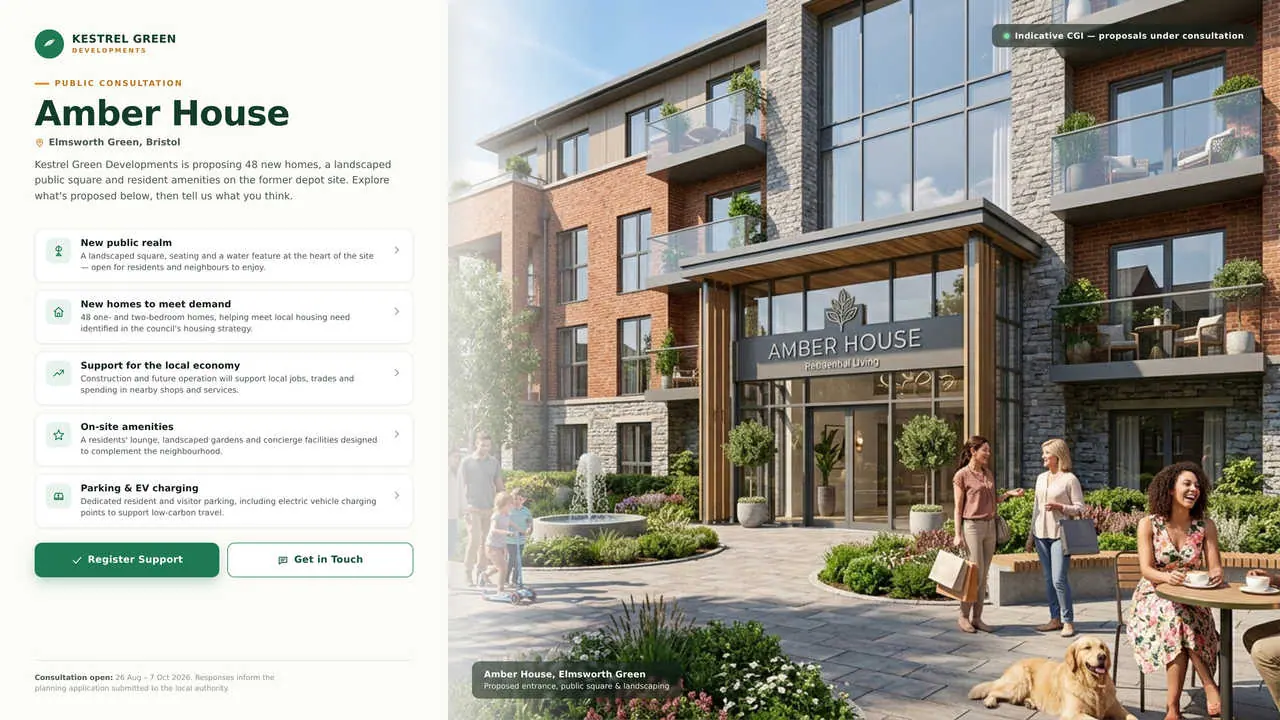
Community Consultation Microsites
Open 24/7, accessible from any device — a full interactive consultation experience with embedded CGIs, 3D, site context and structured feedback forms that produce reportable data.
What you can build with Chalkroom.
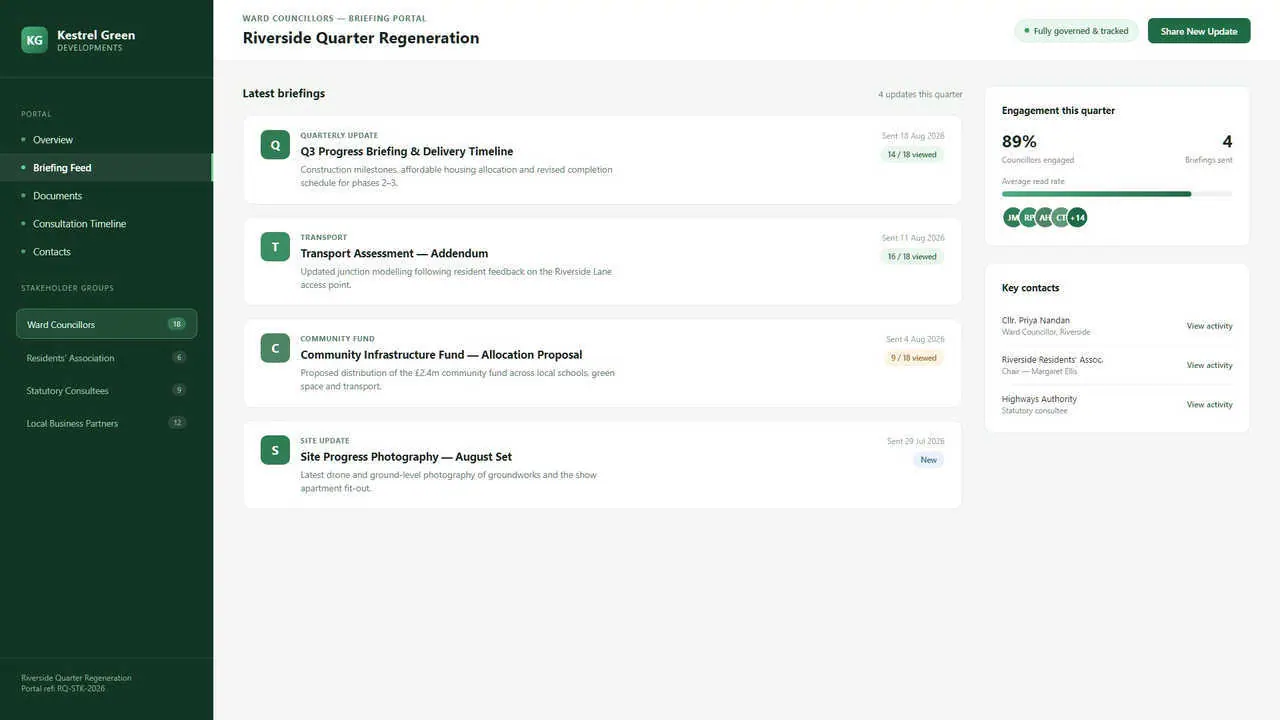
Stakeholder Portals
Private links for councillors, residents' associations and partner organisations — curated content relevant to each stakeholder group, tracked and governed separately.
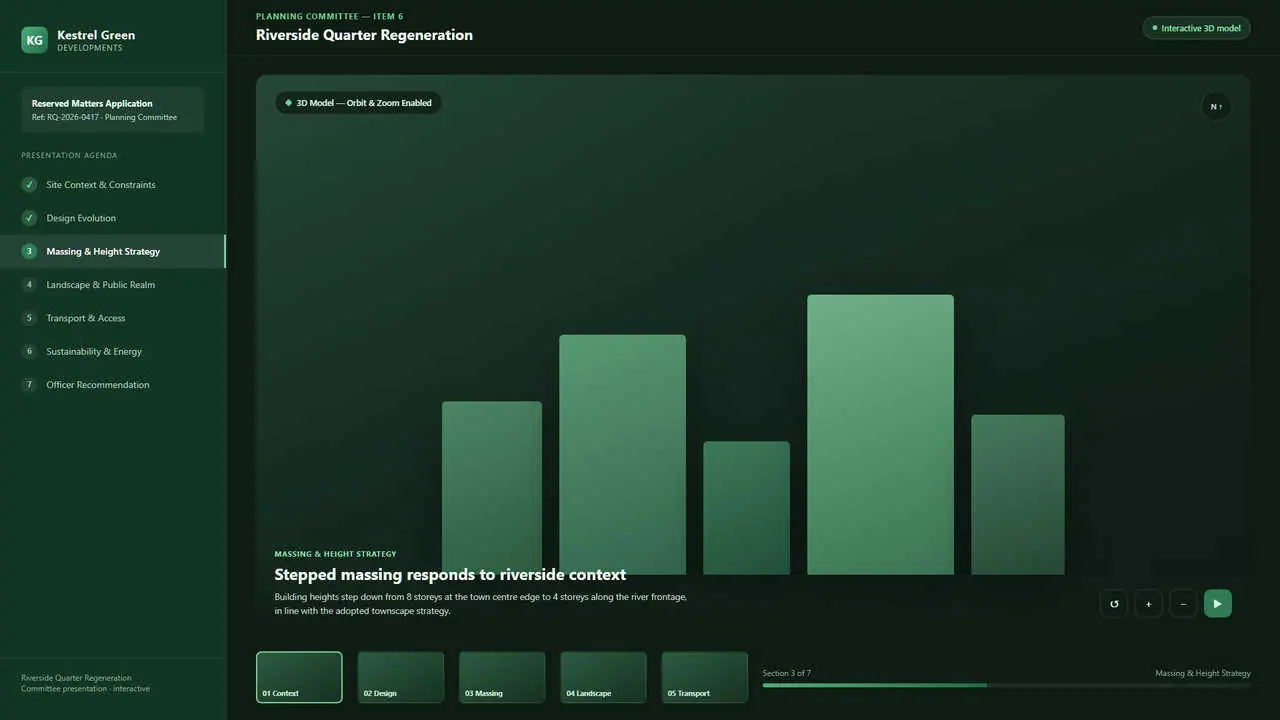
Planning Committee Presentations
Interactive committee presentations with embedded CGIs, site context overlays and 3D models — not flat PDF slideshows that require a presenter to navigate on behalf of the committee.
We understand your world.
Physical exhibitions reaching only those who can attend in person on a specific day and time
Planning documents that are technically accessible but practically unreadable by the public
Community feedback scattered across paper comment cards, email inboxes and social media
Residents with no visibility into how their feedback was considered after consultation closed
3D models and CGIs compressed into flat PDFs that lose the spatial and visual quality
Low community participation rates undermining planning application engagement evidence
Built for your workflow.
Interactive site context
Embed site location maps, transport context and 3D site models directly in the consultation — not as separate PDF appendices.
Structured feedback capture
Built-in response forms that produce structured, reportable data — not comment cards that must be manually transcribed.
Broader community reach
Digital consultations are accessible 24/7 from any device — reaching residents who cannot attend a Tuesday evening public exhibition.
Consultation engagement tracking
See which sections of the consultation were most visited, which questions generated most response and where participants dropped off.
Reportable engagement evidence
Structured engagement data exportable for planning statements — demonstrating genuine community participation beyond attendance numbers.
Stakeholder-specific portals
Curated private links for different stakeholder groups — councillors see one view, residents' associations another, with each version governed and tracked.
Common questions.
An effective public consultation microsite covers six content areas that participants need to form an informed view and submit meaningful feedback:
- Scheme overview — what is proposed, at what scale, and why — in plain language rather than planning jargon
- CGIs and visualisations — how the development will look from key public viewpoints, at quality that conveys genuine character
- Site context and location — maps, transport links, proximity to amenities and existing community assets
- Planning and design rationale — why this design approach and how it responds to local character
- Key dates and process — when is the consultation open, what happens next and how feedback will be used
- Structured feedback questions — specific questions that generate reportable data, not just an open comment box
Chalkroom consultation microsites cover all six in a structured, navigable format — with engagement tracking and exportable feedback data for planning statements.
Planning committee members are increasingly sophisticated about distinguishing genuine community engagement from tick-box consultation. Strong engagement evidence includes:
- Participation breadth — how many unique participants engaged, from which areas, over what period
- Response quality — structured, specific feedback that shows participants understood what was proposed
- Response handling — clear evidence of how feedback was considered and where it influenced the scheme
- Accessibility — evidence that the process was genuinely open to the full affected community
Chalkroom consultation microsites produce structured engagement data covering all four — and the per-section analytics show which elements of the scheme generated most community interest or concern.
Planning committee presentations are evaluated by members who may have limited time with each application and varying levels of technical knowledge. An effective interactive presentation for committee covers five elements:
- Clear scheme summary — what is proposed, where, at what scale, and why — in plain language before any technical detail
- Visual context — CGIs from key public viewpoints, photomontages showing the development in context, and a site location map
- Planning compliance — a structured summary of how the application meets local plan policies and any material considerations
- Community engagement evidence — participation data, feedback themes and where feedback influenced the scheme
- Response to objections — a direct, structured response to the most material objections received during consultation
Chalkroom's interactive committee presentations let planning teams embed all five in a navigable format — so members can explore at their own pace rather than relying on a presenter to navigate on their behalf.
A community consultation scope of works needs to define the engagement programme clearly enough that planning teams, clients and statutory consultees understand what has been committed to before the process starts. It should cover six elements:
- Engagement objectives — what the consultation is designed to achieve and what decisions it will inform
- Target communities and stakeholder groups — who will be consulted, how they have been identified and how they will be reached
- Engagement methods — digital, physical or both, with dates, durations and access provisions
- Information to be presented — what will be shared with consultees and at what level of detail
- Feedback process — how responses will be collected, recorded and acknowledged
- Reporting and output — what will be produced at the end, in what format and for which audiences
Chalkroom consultation platforms deliver structured engagement against a defined scope — with per-section analytics and exportable feedback data for the planning statement.